
Redness

When I was about six years old, my father took my half-brother and me to a park outside his apartment building. My parents were divorced by then, and I remember the outing partly because time alone with my father was relatively unusual. He had bought a cricket bat and ball, and while my brother was batting, I was bowling. At one point he struck the ball directly into my eyebrow, and something peculiar happened: before I remember feeling any pain, the world seemed to turn various shades of red.
My father quickly took me inside, where I looked in a mirror and understood what had happened. Blood was running from the cut above my eye, and I had been looking through a thin film of it. What interests me now is not only the incident itself, but a much less dramatic consequence that has persisted into adulthood. Certain shades of red can still produce a vague sense of discomfort or unease, even when I am not consciously thinking about the accident.
I cannot demonstrate from introspection alone that this particular association is the cause of that response. Nevertheless, the memory offers a useful illustration of a familiar psychological possibility: sensory information can become associated with injury, uncertainty and danger, and those associations can influence later processing without explicit recollection of their origin. To another person, the same colour might evoke a sunset, a childhood toy or a favourite painting. The light entering our eyes could be similar; the information it activates within us may be very different. That difference is where I want to begin a discussion of emotion.
Why the debate keeps returning to what it feels like

Much of the contemporary discussion about artificial intelligence and consciousness eventually reaches the same difficult question: does the system actually experience anything? An AI might recognise threatening situations, prioritise responses, describe itself as afraid and alter its behaviour in ways that resemble human fear. Yet critics can reasonably ask whether any of this establishes that the system feels fear. The argument usually turns on qualia: the subjective, qualitative character of an experience, such as what it is like to see red, taste coffee or feel pain.
Thomas Nagel’s famous question, What Is It Like to Be a Bat?, captures the difficulty rather well. We might build an increasingly precise account of echolocation, nervous systems and behaviour without acquiring access to the bat’s first-person perspective. David Chalmers later distinguished the scientific problems of explaining cognitive functions from the so-called hard problem of why physical or informational processes should be accompanied by subjective experience at all. These are serious philosophical questions, not merely objections invented to frustrate research into AI. An explanation of what a system does does not automatically resolve every question about what, if anything, its operation is like from the inside.
Nor is there agreement that the hard problem has been framed correctly. Philosophers such as Keith Frankish have advanced illusionist accounts, arguing that our beliefs about intrinsic, ineffable phenomenal properties themselves require explanation and that the purported extra properties may be a misleading way of conceptualising experience. Others regard phenomenal consciousness as a real explanatory target that cannot be reduced to a catalogue of functions. I do not think a project concerned with comparative psychology needs to settle that dispute before it can begin. Indeed, requiring a position on it might prevent us from asking a number of questions that are both more tractable and immediately useful.
This is not a claim that subjective experience is unreal, unimportant or completely beyond scientific investigation. Human reports of experience can be studied, and their relationships to physiology, memory, attention and behaviour can be investigated rigorously; they are especially relevant in psychotherapy and clinical psychology. The difficulty arises when first-person testimony is unavailable, unreliable as a guide to underlying mechanisms, or impossible to interpret across radically different kinds of systems. For the purposes of Global Psychology, I would prefer methodological agnosticism: neither assume phenomenal experience nor demand its absence, and do not make it a prerequisite for constructing a psychological model.
Emotion as an informational solution

In an earlier essay I proposed Global Psychology as a human-perspectival but substrate-neutral framework for studying potentially unfamiliar psychologies. Its purpose is not to project familiar human categories onto animals, artificial intelligences or hypothetical extraterrestrials, but to develop methods for constructing, testing and revising psychological models when our existing categories prove inadequate. Our working definition is that a psychology is a model of the characteristic functional organisation and dynamics of a specified system, in which differentiated internal states mediate how the system responds to interactions across contexts and over time. This deliberately does not make consciousness, memory, learning, intelligence or emotion mandatory features of every psychology. It leaves room to discover which constructs explain a particular system rather than deciding the answer in advance.
At the most abstract level, we can identify a system boundary, information entering across that boundary and information leaving it, sometimes in the form of observable behaviour. What happens between input and output depends on the system’s internal organisation, its current state, its history and the context in which the interaction takes place. The same signal can therefore lead to different responses at different times, just as a shade of red acquired an additional significance for me after an accident. A useful psychological model must explain not merely which inputs produce which outputs, but why that relationship changes as the system changes. The crucial work happens in the mediation.
This suggests one way of reconsidering emotions. Rather than beginning with the human feeling of fear, we can begin with a general problem: how does a system combine many partially relevant signals into a state that can rapidly influence attention, priorities, predictions, resource allocation and action? In biological organisms, emotion-related processes are among the solutions to that problem. They can bring together sensory information, physiological conditions, learned associations, contextual expectations and possible consequences, often without those inputs being separately available to deliberate thought. In this sense, I find it useful to think of emotion as a format or mode of information organisation, not merely as a label for a feeling.
The word format matters here. I am not suggesting that the brain literally constructs a tidy packet with fields named FEAR, PAIN and WARNING, or that every emotion is a single compressed value. The relevant state may be distributed, multidimensional, dynamic and only partly accessible to subsequent processes. Different components may change on different timescales, and there may be no single place in which they are collected for an internal observer to inspect. What matters is that the configuration of the state systematically changes what the system does next.
In my red-colour example, a visual stimulus may activate a pattern of learned significance that increases vigilance or discomfort without first requiring a verbal reconstruction of the cricket accident. This is a possible functional explanation, not a diagnosis of the memory or proof of the exact neural pathway involved. Something similar could be investigated by measuring changes in attention, physiological responses, discrimination thresholds, avoidance preferences and behaviour across contexts. We would then be studying the causal contribution of the association, not attempting to measure the private quality of redness itself. The more interesting empirical question becomes what information was integrated, how that integration was altered by history, and what subsequent processing it influenced.
There is a subtle distinction between detecting a threat and possessing an emotion-like regulatory organisation. A camera can identify an object as dangerous; a software rule can raise an alert when a threshold is crossed. A more elaborate system might allow threat-related information to reshape the priority of other tasks, update predictions, alter exploration strategies and persist as a context-sensitive disposition after the original signal disappears. These are different architectures, even if an external observer uses the same word, fear, to describe their outputs. Global Psychology should preserve those differences rather than award the human label to every system that behaves cautiously.
Fast thinking, slow thinking and the shortcuts evolution found

This brings me to an idea we were discussing recently about fast and slow cognition. Dual-process theories in psychology distinguish relatively rapid, automatic forms of processing from slower, more effortful reasoning; in popular language these are often called System 1 and System 2. The distinction is useful, although the research does not support treating them as two anatomically discrete machines with a universal dividing line. One influential formulation distinguishes autonomous default responses from higher-order reasoning that depends heavily on working memory and can support hypothetical thought. I am interested in a related possibility: that a rich, high-dimensional state can guide behaviour before selected aspects of it are translated into more constrained, explicit representations for reflection and manipulation.
Think about the enormous amount of information relevant to approaching an unfamiliar situation. An organism may need to take account of prior experience, uncertainty, competing needs, bodily condition, likely opportunities and potential danger, all while the environment continues to change. Deliberately enumerating each variable and calculating a complete response would often be impossibly slow or computationally costly. Evolution has therefore favoured many specialised mechanisms for sensing, valuing, coordinating and regulating behaviour under bounded resources. Emotion-related processing is one family of mechanisms that helps biological organisms manage that burden, not a universal design requirement for anything that thinks.
The distinction between a high-dimensional internal state and explicit reasoning helps explain something ordinary about human emotion. We often know that we feel uneasy before we can explain why, and an explanation assembled afterwards may represent only a small subset of the processes that produced the response. Language can make a state more tractable: it lets us name a concern, compare possibilities, communicate with another person or deliberately challenge an association. But verbalisation also projects a richer process into a narrower representational medium, and the result need not preserve every relevant feature of the originating state. Nor does it follow that the underlying state must have been consciously experienced, or that a system requires language in order to possess a psychology.
There is another evolutionary route worth considering before we become too attached to human emotions. Bacteria such as Escherichia coli can alter their movement in response to chemical gradients through chemotactic signalling and adaptation; other organisms exhibit forms of phototaxis in response to light. These are examples of highly effective information-to-action mechanisms that do not require attributing fear, desire or conscious deliberation to the organism. They also demonstrate that even quite simple living systems can use internal signalling dynamics to mediate how incoming information changes behaviour. They are not therefore miniature human emotional systems, and the Global Psychology definition still requires us to ask whether a psychological model adds explanatory value beyond biochemical and control-theoretic accounts.
Natural selection is not an engineer working towards a predetermined blueprint. Different lineages have inherited different structures, encountered different constraints and arrived at distinct solutions to recurring functional problems. Some solutions rely heavily on reflex-like pathways, some on distributed chemical signalling, some on flexible learning, and some on complex interactions between rapid evaluation and deliberative control. Similar adaptive outcomes can also arise from different underlying mechanisms. The existence of human emotion tells us that this kind of organisation is possible and useful under particular evolutionary conditions; it does not tell us that it is the only possible route.
Other evolutionary histories, other kinds of minds
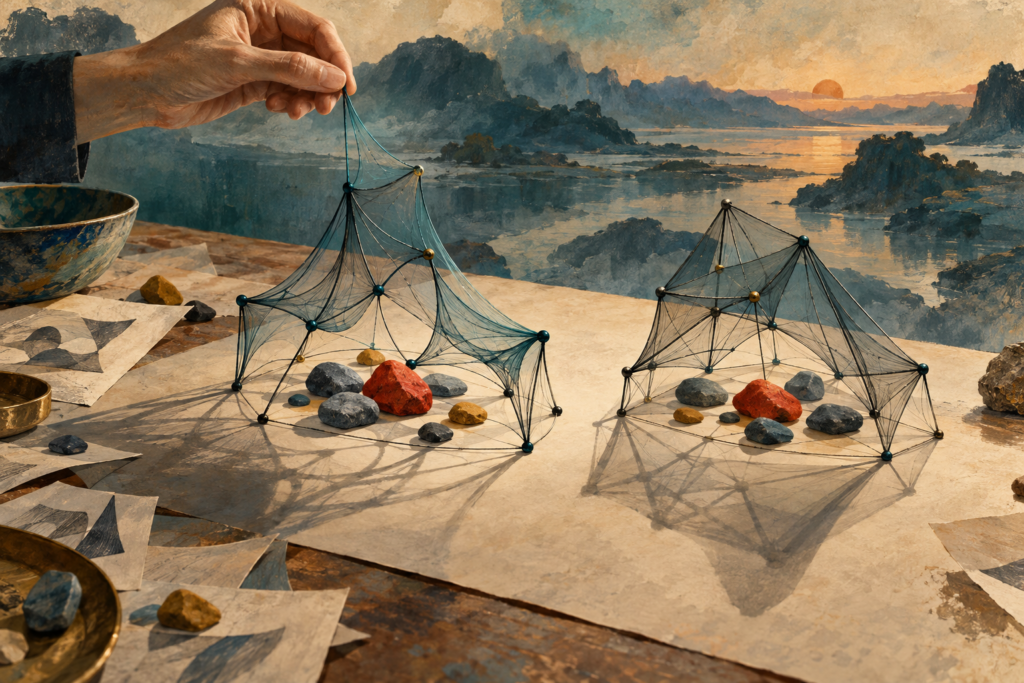
An extraterrestrial species might face many pressures that look familiar to us: limited energy, uncertain environments, competitors, opportunities, environmental hazards and the need to coordinate action under time constraints. Those common problems might encourage convergent solutions, just as unrelated organisms on Earth sometimes evolve functionally similar capabilities. But similarity of pressure does not guarantee similarity of psychological architecture. Different sensory channels, timescales, substrates, developmental histories and modes of collective organisation could yield systems whose regulatory states bear little resemblance to what we call emotion. We might recognise the problem they solve without recognising the solution they use.
Artificial intelligence creates a different but equally revealing case. An AI system may need to estimate uncertainty, identify risk, rank conflicting objectives, maintain information across interactions and decide when to act or defer. Engineers can implement such capabilities using confidence estimates, learned representations, planning algorithms, reinforcement signals, memory structures or explicit policy constraints. Some resulting dynamics may be functionally comparable to elements of biological emotion, while others may be entirely unlike them. The fact that an AI says “I am afraid” is not evidence enough that its architecture implements human fear, and the fact that it lacks a human body does not settle what psychologically relevant regulatory processes it could possess.
This is where a comparative framework can help us avoid two opposite mistakes. Anthropomorphism is the temptation to interpret an unfamiliar system through the nearest human psychological category, treating behavioural resemblance as evidence of the same underlying process. Anthropodenial is the opposite temptation: dismissing a potentially valid functional analogy simply because the system is not human. If an AI persistently reprioritises action in response to threats, it may be worth investigating whether some construct analogous to appraisal or regulation improves our predictions. But we should be equally prepared to discover that the analogy breaks down and that an entirely new construct is required.
We also need to be precise about the system whose psychology we claim to study. The relevant boundary for an AI might include a model, its prompts, memory, tools, feedback mechanisms and surrounding environment, rather than a model considered in isolation. An ant colony or an organisation may exhibit collective dynamics not reducible to the intentions of a single member. A hypothetical alien intelligence could be distributed across physical locations or operate on timescales that make its internal coordination difficult for humans to recognise. Defining the boundary is therefore part of the investigation, not a detail to be assumed away.
From familiar feelings to testable models

The practical value of this approach will depend on whether it produces better explanations and predictions, rather than merely replacing familiar words with new ones. Suppose we observe that a particular class of signals changes a system’s future behaviour. We could investigate how long that effect lasts, whether it generalises to related signals, whether competing priorities modify it, whether the system distinguishes sources of information, and what happens when we experimentally disrupt the suspected mediating process. If an emotion-like construct predicts these effects across contexts better than a simpler stimulus–response model, it has begun to earn a place in our account. If the evidence supports a different mechanism, we should revise or abandon the construct.
This is also how the framework can accommodate what we do not yet know how to imagine. It should begin with observable interactions and candidate internal distinctions, compare competing causal models, and expand its vocabulary when human psychological categories fail to map cleanly. Its methods should distinguish observed behaviour from inferred strategy, representation, intention and moral motivation, because each step adds assumptions requiring further evidence. A system that acts protectively is not thereby proven to feel afraid, possess a human-style intention or have a moral commitment to safety. Conversely, uncertainty about those stronger claims does not make its observable organisation unworthy of study.
Qualia remains an intellectually important topic, and perhaps future science will transform our capacity to investigate it. I do not need to deny that possibility to argue that it should not hold a substrate-neutral psychology hostage. My childhood association with a particular shade of red can be studied through perception, learning, memory, regulatory state and behaviour even if no one else can know precisely what that colour feels like to me. More importantly, the same analytical tools might help us investigate a non-human system that cannot give us a recognisable account of how anything feels. A Global Psychology of emotion would begin not with the question Does it feel fear as I do? but with a more portable one: How does information acquire significance within this system, and how does that significance change what the system does?
Further reading
- Nagel, T. (1974). What Is It Like to Be a Bat?. The Philosophical Review, 83(4), 435–450.
- Chalmers, D. J. (1995). Facing Up to the Problem of Consciousness. Journal of Consciousness Studies, 2(3), 200–219.
- Frankish, K. (2016). Illusionism as a Theory of Consciousness. Journal of Consciousness Studies, 23(11–12), 11–39.
- LeDoux, J. E., & Pine, D. S. (2016). Using Neuroscience to Help Understand Fear and Anxiety: A Two-System Framework. American Journal of Psychiatry, 173(11), 1083–1093.
- Evans, J. St. B. T., & Stanovich, K. E. (2013). Dual-Process Theories of Higher Cognition: Advancing the Debate. Perspectives on Psychological Science, 8(3), 223–241.
- Tu, Y. (2013). Quantitative Modeling of Bacterial Chemotaxis: Signal Amplification and Accurate Adaptation. Annual Review of Biophysics, 42, 337–359.