

Imagine taking a work problem with you on a walk through a forest. The desk and screen are behind you. There’s room to breathe, to move, to let your attention settle without staring at a blank page. You begin talking it through with an intelligent assistant in your ear. You’re not typing on your phone or looking at its screen; you speak as you walk, and it responds in your ear. You explain the context, follow a thought, question a suggestion, change direction, while the assistant helps with searching, outlining and drafting, and you shape the result. I experienced this in a specific piece of work. Not too long ago, I was in a team meeting about reviewing legacy systems. We decided the work needed a guidance document, and I was given the assignment.
I knew the routine that would once have followed. I would be at my desk late into the evening, staring at a screen: typing, searching, checking, then going back over what I had written. There would be industry practice to research and colleagues to consult about the company’s circumstances. I would try to keep the argument in my head while finding the next useful source, keeping myself going with caffeine. The document would take shape over days, sometimes weeks.
This time, I didn’t head straight back to my desk. I put on my AirPods and went for a walk.
I started by explaining the context to the assistant. I talked through the legacy-systems review, why we needed the guidance and who would use it. Once that was clear, I asked for an outline. Listening to it helped me notice what was missing. I could question a suggestion, add something the assistant didn’t know about the company and redirect the outline before we began drafting.
Then we worked through the sections. The assistant drafted; I listened, corrected and asked for changes. When a point needed more support, I could ask for research into current practice, academic work or market reports. When the wording didn’t reflect how things worked in the company, I explained the difference. Each response gave me something concrete to work with, and the next instruction came from what I thought of it.
Before finishing, I asked the assistant to review the document from the perspectives of its readers: an engineer looking for detail, an executive considering the decision, a business reader without a technical background. I could listen to those different readings, think about the gaps they exposed and shape the draft again.
By the time I got home, the content was ready to put into the corporate template. For some of my documents, work that had spread across days or weeks could come together during an hour’s walk. Walking suits the way I think. What interested me was being able to develop the document through conversation, with the assistant helping me turn that thinking into something I could use.
Following the leads
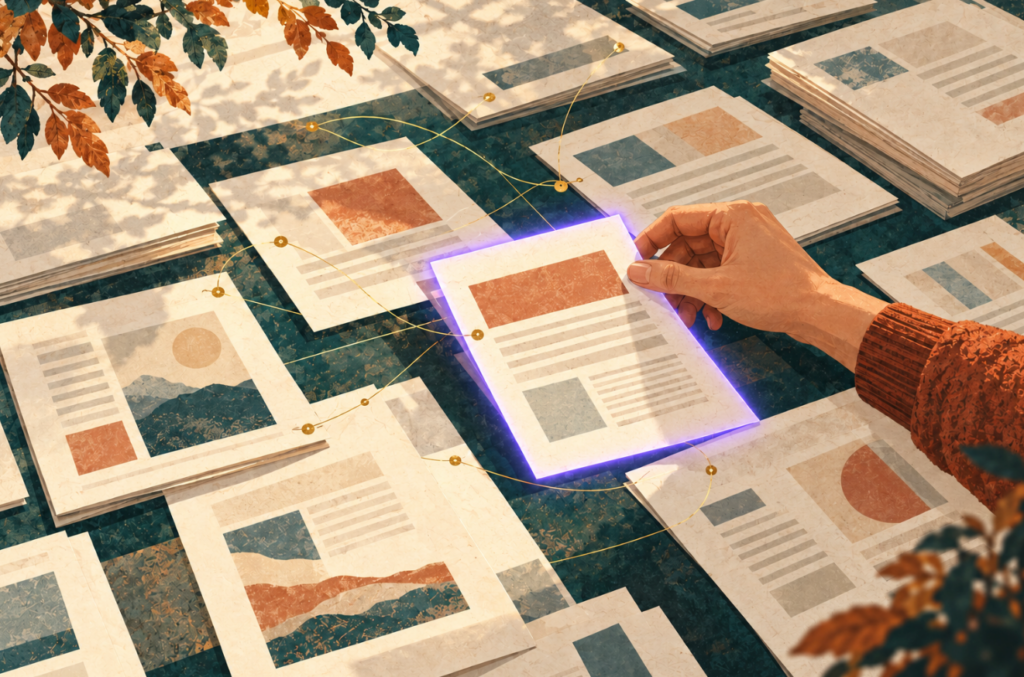
I assisted the head of a legal team in using AI to process a decade’s worth of legal documents, provided as scanned PDFs. It helped pinpoint relevant details and references across the large document collection, saving the team countless hours of manual review. That allowed them to focus their attention and expertise on following up the leads the AI identified.
The AI also flagged possible inconsistencies in opposing counsel’s material and assembled summary tables with references and cross-references. The lawyers could trace each lead back to its source, examine the surrounding material and decide whether it mattered to their response. They manually checked the references they relied on; AI helped them find where to look, while their expertise guided what to make of it. Because the documents were sensitive, the work also required an appropriately governed environment. The result was a more focused use of the team’s attention.
Choosing where to look
I recognised that problem of attention in my own academic research. A search could leave me with a set of papers to explore and a decision about which to open first. Reading every result in full would take time before I knew how much of it would help answer my question.
I began by talking through the search strategy with AI and agreeing the criteria for relevance. I wanted those choices settled before asking the assistant to score the results. It could then rank the papers against what I was actually looking for, giving me a starting point for my reading.
I still had to open the papers and work through the ideas. I also needed to check lower-ranked or excluded results, because a ranking could miss something useful. But I could approach the collection with a clearer sense of where to begin. The assistant helped organise my attention around a question I had defined.
The lawyers had references to follow; I had papers to prioritise. In each case, AI helped make a large body of information more manageable for the person who needed to understand it. The work that followed was different, but the starting point had become more useful.
Connecting information to systems
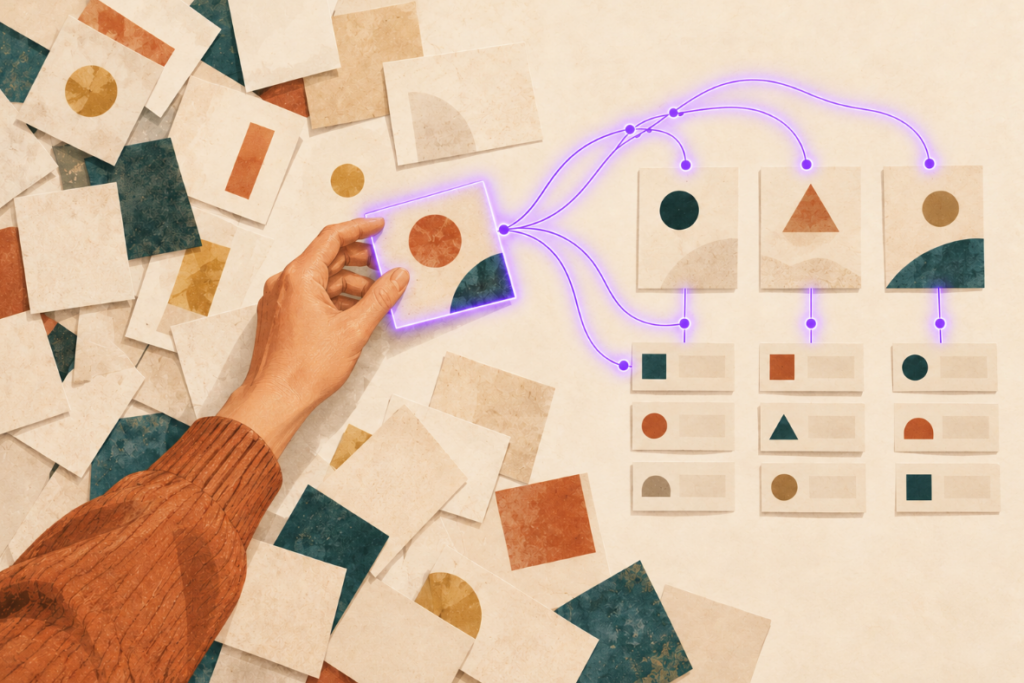
In my work as an enterprise architect, I often have to bring together information that doesn’t arrive as one coherent collection. Different sources use different terms. Records have gaps. Some datasets can be connected by straightforward rules; others need a judgement about what the information means and how the organisation works.
I also have to consider policies, regulations, standards and decisions already made. Joining the data is only part of the work. I need to understand what it says about the organisation, how its IT systems relate to one another and where the evidence supports a recommendation. Here, I can work through the supplied information and constraints with an AI assistant. Where a mapping needs judgement, it can suggest a connection and give me a rationale to examine. I can question that connection, bring in relevant context and check the supporting data or policy reference. The assumptions, gaps and uncertainty need to stay visible so that I can decide what the analysis supports.
The findings can take a form colleagues can read and discuss. They can also be returned as JSON, a structured format that software can process consistently, store in databases and use in business-intelligence reports. That gives the analysis a route into the systems through which work is managed, while keeping the support for each judgement available for review. I find that connection as interesting as the walk. At one end, I can explain a problem aloud and shape a document as I move. At the other, I can work through fragmented information and carry the resulting analysis into organisational systems. Between them sit the lawyers examining references and the researcher deciding what to read. Each suggests a different way to organise work around the person doing it.
Where attention goes
It is natural to describe these experiences in terms of efficiency. Some of the searching, sorting and drafting can be automated, leaving less work to do by hand. That matters. But I think the more interesting change is in how the remaining work is organised around the person doing it.
On the walk, conversation gave me a way to develop a document while moving. The legal team could follow relevant leads through a large collection, bringing expertise to the passages that needed interpretation. In research, agreed criteria helped me choose where to begin reading. In architecture, suggested connections gave me something to examine, question and carry into organisational systems. Different activities, but a similar shift in where attention could be placed.
Attention does more than absorb information. It frames the question, notices what is missing and decides whether an answer makes sense in its context. Finding a passage and understanding its significance are connected parts of the work. When AI helps with the first, the opportunity is to give the second more room.
That opportunity still depends on how the work is arranged. A ranking can narrow a search too far; a plausible connection can lead us in the wrong direction. The source needs to remain available, and the person needs the freedom and competence to challenge the suggestion. Otherwise we may spend the time we hoped to release repairing output or following an unhelpful lead.
I find it useful to ask where human attention would make the greatest difference in a particular piece of work. The answer might be a difficult judgement, a conversation with a colleague, an overlooked source or the space to explore a different approach. AI can help make that choice more practical, while responsibility for the choice remains with us.
The question I take from these experiences is what we choose to give our attention to when some of the surrounding work becomes easier.